
Community Interview: Getting to Know District Court Judge Cheryl Andrews McDonald |
Get to know Forsyth County District Court Judge Cheryl Andrews McDonald. In this exclusive Q&A, we discuss her 19-year legal career, her philosophy on justice, and why she hopes to call Lewisville or Clemmons home soon. Read the full interview to learn more about the person behind the robe. |
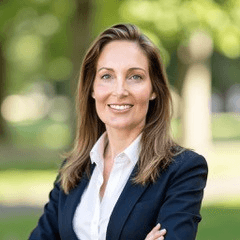
We recently had the pleasure of interviewing Judge Cheryl Andrews McDonald, who serves in District 31, Seat 4 of the Forsyth County District Court and is running for re-election. With 19 years of experience as an attorney before her appointment, Judge McDonald brings a wealth of knowledge and a passion for public safety to the bench. From her 'Supper Club' hobbies to her vision for a fair justice system, discover what makes Judge McDonald a unique leader, and why she hopes to one day call Lewisville-Clemmons home.
Please note that WLLC is not promoting any candidates but only providing information to the community; we remain neutral and committed to sharing the stories of our local leaders.
WLLC: How long have you lived in Lewisville/Clemmons? Judge McDonald: I haven't lived in Lewisville or Clemmons yet but I imagine Lewisville or Clemmons living in my future. A big piece of my heart, my stepson, lives in Clemmons. I would love to hear people's opinions and votes for where to look. So far, I have lived in the Ardmore area of Winston-Salem, the South side of Winston-Salem, Belews Creek, for a time, and now I'm back near my alma-mater Wake Forest University. Let's start a conversation...where I should go next?
WLLC: Where did you grow up? Judge McDonald: I was born in Durham, NC. Shortly after I was born, my family moved to Florida where both of my parents had grown up and my grandparents and aunts, uncles and cousins were living. We stayed in Florida until my older brother and I graduated from high school and then we moved back to NC.
My parents have lived in Salisbury, NC for nearly 30 years. I worked my way through college attending UNC–Greensboro where I graduated Summa Cum Laude with Phi Beta Kappa honors. My hard work paid off and I was able to attend Wake Forest University School of Law where I received my law degree in 2006. I fell in love with Forsyth County and its people while attending law school and have been here ever since.
WLLC: What was your background before becoming a judge? Judge McDonald: Prior to becoming a judge, I dedicated the first 19 years of my career practicing law and protecting the rights of the people of Forsyth County. I began my legal career in public service. It was "boot camp" for a young lawyer. I learned to manage a heavy caseload, communicate with all types of people and to make rational informed decisions under pressure.
In 2010, I joined the Holton Law Firm, with former U.S. Attorney Walter C. Holton, Jr. and Lynne Holton. In private practice, I was able to expand my practice of law to include civil litigation, business disputes, domestic cases, personal injury, wrongful death, estate disputes, and still handle all variety of criminal cases.
WLLC: What made you decide to become a judge? Judge McDonald: The reason I became a lawyer is the same reason I became a judge. It is because fundamentally and at its core, I believe in our justice and legal system. I believe that if every person in each and every position fulfills their role ethically and fully performs their duties, the system should reach the correct and just result. While the correct and just result does not mean that all parties to the case are pleased with the outcome, it should mean that all parties know that they had the tools and opportunity to have their case heard and that the law was
WLLC: What is your view as the role of a judge in interpreting the law versus the role of the legislature in writing it? Judge McDonald: Judges Ensure the Fair Application of the Law: I am a district court judge. District court is where justice and laws are applied to everyday life. District Court is the court that regular people are most likely to interact with. A judge's role in District court is to apply the law fairly and equally to each and every person law as it is written. A District Court Judge's role is not to create new law. We are here to ensure that the same law is applied across the board.
That being said, District Court judges are called upon to interpret and apply the law to many different factual situations. Over the last 20 years I have had the opportunity to do just that. In addition to relying on years of experience interpreting the law, judges also rely on the written decisions of appeals courts that have addressed and clarified the exact language and meaning of the written law over time. The entirety of written appeals courts decisions is called “case law”. Judges do not change the law or create new laws.
The legislature, through processes, checks and balances may change or create new law.
Judges cannot operate without written laws to apply, and the legislature depends upon judges and the justice system to give life and effectuate the laws the legislature creates or changes. The two are interdependent but play vastly different roles in the justice system. WLLC: What is your view on the primary purpose of sentencing? Is it mainly for retribution and deterrence, or for rehabilitation and addressing systemic issues? Judge McDonald: The primary purpose of sentencing is to promote justice and public safety through a fair, lawful, and proportionate response to criminal conduct. Sentencing should hold individuals accountable for their actions while reflecting the seriousness of the offense, the harm caused, and the circumstances of the offender.
In practice, this means balancing those recognized goals—punishment, deterrence, rehabilitation, and protection of the community—while taking into account the individual circumstances of each case and proving access to helpful resources. A just sentence is one that is individualized, and designed not only to address past conduct, but also to reduce future harm through rehabilitation.
WLLC: What is your stance on the use of "Specialty Courts" (e.g., Drug Courts, Mental Health Courts, etc)? Judge McDonald: Life does not exist in a vacuum. Specialty courts take into account the many causes and effects of life on individuals. By their identification of specific common issues that may bring people into contact with the justice system, these courts are the best way to try to address some of those universal societal issues, and offer resources to those who are willing and ready to make a change and become their best selves. Again, we are all human beings. Life can be difficult and anything we can do to improve an individual’s life, improves our
WLLC: Why did you want to become a leader in this community? Judge McDonald: I have always been a person of action. If I see a need, I want to take informed action. I care about our community and everyone in it. Oftentimes, people want to help, to make a difference, but they don't know where or how to fit themselves in to the solution. I want to be a voice that can provide guidance and information on the needs of the community and the places we can plug ourselves in to be part of the solution.
WLLC: What has surprised you most about the realities of the judicial system since taking the bench? Judge McDonald: After twenty years practicing law, I feel like I've seen and experienced just about every aspect of the court system. I think it's more important to never forget the reality that people come to the court system with things that are very important to them. Every person's case is the most important thing in their life. They don't see their case as just another in a long list of cases the court has to address. So, the important reality is that each and every person working in the justice system, especially judges, must give each case and each individual their full and fresh attention.
WLLC: Do you have any advice to give aspiring leaders? Judge McDonald: Find good role models, learn from them but do not try to mimic them. Find a variety of people to learn from. Don't be afraid to ask people that you admire. Use your unique perspective to apply their wisdom coupled with your personal experiences and insights to build a whole new type of success and leadership style.
Be humble and confident. Those two characteristics are not mutually exclusive.
WLLC: Who inspired your judicial aspirations? What was it that inspired you? Judge McDonald: Growing up, no matter how difficult things might have been for our family, my mom was always looking for ways to show kindness and care to people. Whether it was taking flowers to a person she met at the store who was having a tough day or visiting neighbors who weren't able to get out of their homes very much. She always included me in this community care. I learned the joy of taking care of the community and I think this is what first sparked in me the importance of taking on a bigger role to make a difference in the world.
When I became a lawyer, I learned that a judge’s ability to listen, empathize, and interact with everyone in the courthouse greatly influenced the community’s trust in the judicial system. By being a judge who listens, treats everyone with respect and applies the law fairly, I know I am a serving the justice system, caring for our community and making a difference.
WLLC: What is something most people don't know about you? Judge McDonald: I used to be an avid rock climber. I'm not claiming "Free Solo" level climbing. I have too rational a brain. I started out in the climbing gym at UNC-Greensboro, I made friends and then moved to top-roping at Pilot Mountain. I progressed to climbing at Moore's wall with cams (and clipping into the anchors) and eventually went to Joshua Tree National Park and had a blast friction climbing those beautiful rocks.
That was many years ago, but this past summer I did get to go back to Joshua Tree National Park and rekindle my love for those rocks.
WLLC: What are your favorite things to do in the neighborhood? Judge McDonald: I love to do anything outdoors. Farmer's markets, picnics, any excuse to be in the sunshine. I am a big fan of baseball and love going to games. I enjoy trying new restaurants and for a while I had a "Supper Club" that met once a month at a new spot. I'd love to hear suggestions of new places to try. Maybe we can get Supper Club back up and touring the area.
WLLC: Why do you think it's important for people to shop local? Judge McDonald: Local businesses employ local people and represent local dreams, talents and values. Shopping local keeps money local and helps foster those dreams and talents.
WLLC: What do you want to see improve the most in this neighborhood? Judge McDonald: As a judge, I am interested in public safety and I want to increase people's faith in the justice system. I want them to see it as accessible to everyone and as a place to go for fair, reasonable solutions, protection and help. If we trust the justice system to do operate fairly, we can expect greater respect for the law, and with respect for the law we are moving toward safer communities.
Website/Blog
Facebook
LinkedIn
Instagram |
0 Comments
Join the conversation
Be the first to comment
Share your thoughts above.